Metropolitan is a manufacturer of modern wood custom picture frames for museums and galleries.  Our custom picture frames are available in standard, thin, ultra thin and wide profiles in 5 woods, 36  finishes, & 6 depths. Metropolitan also manufactures custom floating picture frames and very deep customshadowbox picture frames.  Optional components include: custom wood spacers, custom made strainers, custom 4 or 8 ply picture frame mats, custom sized acrylic, and custom sized backing boards to ensure you get all the components you need to present your artwork professionally. All are available in length, cut to size, cut to size with wedges, or joined with or without splines. See framing advice for step by step instructions and videos.
MATTED PRESENTATION
This is the classic presentation where the mat covers the edges of the artwork. It is recommended when the artwork has a border or edges that should be covered. Generally, as the size of the artwork increases, the size of the mat border increases as well. We seldom recommend mat borders that are less than 2″. Sizes ranging from 16″x20″ and up generally get 2 1/2″ to 5″ borders. Take the stress out of the calculations with our new online mat calculator.
FLOATÂ PRESENTATION
Float presentations are used when you want the viewer to see the edges of the art, or when the artwork is dimensional and requires a larger separation to ensure the glazing is not touching the art. A shadowbox frame (ie. deep enough to accomodate a spacer) is used to separate the glazing from the artwork. Generally speaking when floating artwork the border size is smaller than when using a mat. Typical borders range from 1/2″ on smaller pictures to 2″ on larger artwork. Take the stress out of the calculations with our new online float calculator.
FLOAT AND MAT COMBINATION
This presentation is used when you want the edges of the art to show and a matted presentation will allow enough separation from the artwork. When measuring the artwork, be sure to measure from the widest and longest point. Then determine how much of a float you want around the artwork before the mat starts (typically 1/4″ on smaller pictures and 1/2″ on larger pictures.) Generally, as the size of the mat increases, the size of the mat border increases as well. We seldom recommend mat borders that are less than 2″. Sizes ranging from 16″x20″ and up generally get 2 1/2″ to 5″ borders.Take the stress out of the calculations with our new  float and mat calculator.
I like the use of conscious, repetitious marks in transition as a means for transcendence in both process and viewing. By repeating and layering the linear elements and employing careful, but less than scientific methods of color choice and mixing, these "energy fields" are intended to be calming yet energizing, uplifting and stimulating but at the same time, meditative.
I’m hoping to find those mysteriously poetic spaces that I did not know existed before…and which hopefully affect the viewer each in their own personal way. Much of my work is “created by hand†on the computer, but has the look and feel of real paint. I find the computer enables me to experiment and to learn from an infinite number of color, value, line and space permutations, still allowing for the history of a piece to show through the layers. Using brushstrokes and other elements and sometimes whole layers from previous work helps to connect each work to the other. The happy accidents of chance combinations are an added bonus. In the last few years I have used the encaustic medium to add to the luminous quality of my work.
These paintings are about mining the subconscious and they arrive almost on their own. Layers of paint and wax, collaged paper, photographs, words and objects; adding and subtracting with hands or brush or pencil or pouring or sanding or scraping until something emerges. The meaning also emerges, sometimes lagging behind the images and surprising the artist. There is a thrill in this way of working, in receiving messages from that place below words.
Collage is the primary medium of my work. I am interested in pattern, texture and the messages conveyed by the combination of text and image. This work is an investigation of memory, nostalgia, time and space.
The wonder is that what may seem fixed and static laws are instead dynamic and expressive of great potential and creativity. One principle in particular, the so-called Golden Mean Proportion, is perhaps the most dynamic of all, and I have worked with its potential for years. Within it’s rigor I activate and alter the surface of canvases, works on paper and constructions freely, creating contrasts of light and dark, depth and surface, energy and stillness, using saturated color inspired by trips to the ancient sites of Greece and Egypt.
We’re halfway thru the decade when humans shift from mysterious beings - to big data algorithms, where everything about us will be known. Rather than worry, I envision a time when personal data is a unique glimpse into our hidden personality. Patterns of behavior will become patterned artworks and the mass of data will predict our lives. Will it backfire? Our movements, choices, health - even the food we ingest will be anticipated. How will it feel when self-delusion and forgetting become impossible?
No matter what life brings, along with it comes an endless stream of fascinating botanical subjects. Having always been interested in the natural world, it was only a matter of time before art led to an exploration of some of the wild things we find around us. Painting plants can seem anachronistic, requiring close attention and painstaking detail. It opens a window onto a no longer common way of doing things, and coaxes us to slow down and really see. This takes time, but we live in a fast-paced, cluttered world. We have to make space for plants; they create a world we can live in.
It’s just that the world now seems both more fragmented and more connected than it ever did before, and so I’ve begun using collage and montage to construct work that reflects and questions that dichotomy. Do images piled atop one another deny or define what’s underneath? Do collaged layers invite you to look at them as a whole? Or do you look through and around a pieced-together image instead of just at it? What happens when two images bump up against one another? Or words bump up against an image? Is it unexpected? unsettling? strange? revealing? funny?
I am interested in an approach to art making that explores the often-conflicted relationship between the decorative traditions in geometric patterns found in other cultures and western modernism. However, the recent paintings, prints and collage-drawings avoid culturally specific subject matter in favor of a more elusive pictorial terrain of contemporary abstraction. Inasmuch, my work attempts to reflect a broader generational curiosity where the familiar and unfamiliar converge.
Brazil and the Amazon River Basin have been the subject and inspiration for my work for more than twenty-five years. Visiting the region now two to three times a year I find that the landscape has many moods. The Amazon River is an apt metaphor for the act of churning up remembered objects and sights, gathered while traveling along its rough course. In its flow, the river boils an object to the surface only to swallow it up again to resurface later. These impressions are a memory of the river bound on both sides by a high, dark jungle; foreboding and beautiful. If it takes you in, it takes you in whole.
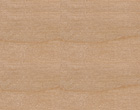
Maple is our most popular wood. It is valued by museums and fine art galleries for its neutral appearance. Metropolitan Picture Framing clear lacquer and stain finishes are semi-transparent, allowing the grain of the wood to show. Our painted finishes are opaque and have seamless corners.
Cherry in its natural state has a light red color which makes the finishes have a depth of color that cannot be achieved on other woods. All woods will change color over time. Cherry gets darker giving it even a deeper concentration of color and grain. The wood is moderately heavy and hard. Cherry like walnut is more expensive than the other wood options we provide.
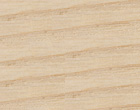
Ash is a very dense wood with a grain pattern that can complement or detract from the artwork. If the grain complements, it is a good choice because it is our least expensive option. Ash will vary in color and is not recommended on the clear and white finishes if consistency is important. It is most popular in our darker wood stains and charcoal and black finishes which will cover the inconsistencies.
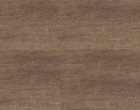
Walnut has a rich dark brown heartwood with a tan colored sapwood. The wood is fairly soft and moderate in weight. It will lighten with age. Darker finishes are often used to cover the color differences in the heart and sapwood.
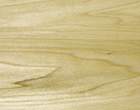
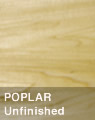
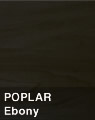
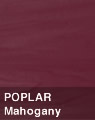
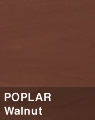
Poplar varies from light cream to yellowish brown, with occasional streaks of gray or green. Poplar is primarily used for painted or dark finished frames because of its color inconsistencies.  Poplar typically has a straight, uniform grain, with a medium texture.  Because Poplar is an inexpensive hardwood it is a good choice when price is a consideration.  Colors tend to darken upon exposure to light.
FINISHES
Call customer service for free cuttings.
PURCHASING OPTIONS
UNJOINED
JOINED
Uncut Lengths
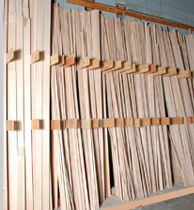
All of our frame profiles can be purchased uncut in lengths. They can be purchased unfinished or finished to order. Lengths vary from approximately 8 to 12 feet (most will be 10′). We will come as close to the footage on your order as possible. Note that UPS will not ship over 8 feet. When ordering you can specify cut 5′ and balance, 6′ and balance, 7′ and balance, etc. On larger orders we normally ship by truck and cutting the lengths is not necessary.
Standard Join
Frames are cut to your specifications, glued, and joined with our wedge system from behind so there are no visible nail holes. All frames are then touched up and sanded before they are finished to ensure the highest level of quality.
Cut to size
Frames are cut to your specifications with mitred corners. This option will require that you have a method for joining the frames. It is commonly used by picture framers and woodworkers who have their own joining equipment.
Matched Splines
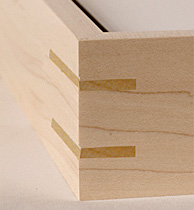
Spline joints are used for additional strength and beauty. Because the spline joint offers a larger glue area, the joint becomes very strong. They are necessary on very large and or very thin frames. Matching splines use the same wood as the frame and are less conspicuous than the contrasting splines. Spline joints are often used with painted white, black and graphite frames to add stability to their seamless corners. With the painted finishes they will not be visible.
Cut to size w/wedges
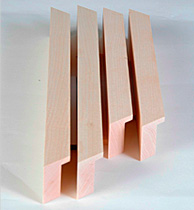
The wedge system makes the joining of wood frames as easy as joining metal frames. The frame comes to you unjoined, but the mitres have been routed out from behind with a special machine. You glue the corners and insert a plastic wedge and use a hammer to insert it into the prerouted slot. This system will allow you to adjust the corners until they are aligned. See framing advice. This option is often used by customers who are ordering large or oversize frames and want to save money on shipping.
Contrasting Splines
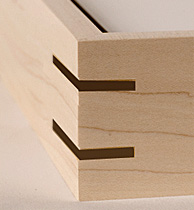
Spline joints are used for additional strength and beauty. Because the spline joint offers a larger glue area, the joint becomes very strong. They are necessary on very large and or very thin frames. Contrasting splines are made from a different wood than the frame and are used primarily to complement the overall frame presentation. They are only noticeable on unfinished or lighter wood finishes. This option is less commonly used than the matching splines.
PACKAGING & SHIPPING
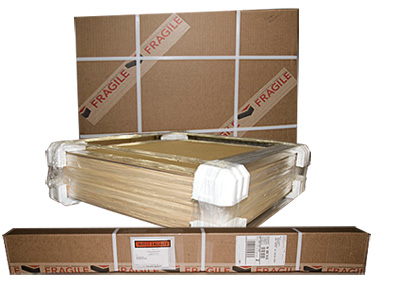
PROFESSIONAL PACKAGING. Plastic wrap or coadhesive is used for protection on all frames. On joined frames cardboard is banded to the top of the frame package for extra protection. Styrofoam corners or angles are put on the top and bottom of the frame package. All packages come in a custom made corrugated box. Boxes are then taped and banded for ease in carrying and additional safety.
SHIPPING ESTIMATES are difficult to give because prices vary by zone, size, and weight. Most orders over $500 that do not require expedited shipping or oversize shipping should not exceed 15% of the order. Note: Although we do not have minimum orders, handling & shipping charges will be high if just ordering one individual frame. This is especially true on larger frames due to UPS oversize charges. To minimize shipping charges on single large frames, we recommend purchasing them unjoined with our wedge system. See framing advice.
Shipping Tips
Item(s) successfully added to cart
What would you like to do next?
Login Successful
You can access your account settings/screens via the My Account menu on top.What would you like to do next?